Submitted by robertdapice on Sat, 07/04/2015 - 17:30
Team Name:
Blackwattle
How thick is the glass ceiling in Australia? Women have broken through … right? Let look at the facts …. Across all occupations, a man is 4.6 times more likely to reach a high paying role, will earn $24k more than a woman per annum and, alarmingly, this income gap is widening.
Submitted by ElectronicallyE on Sat, 07/04/2015 - 17:21
Team Name:
ElectronicallyE
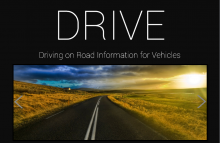
DRIVE is a website designed to be easily understood by the masses.
The website currently contains 3 pages, Home Page, Fatalities and Roads. These pages combined contain information about safety, road tolls plus quick facts, roads, maps and reviews.
Search engines are found throughout the website, allowing people to find specific data.
Maps provided by Google Maps are simple, yet inform the public about roads. This includes surface, distance and traffic. On this same page, members of the website can review roads, also giving a star rating out of five.
Submitted by GeorgiaBatman on Sat, 07/04/2015 - 16:59
Team Name:
BiblioFile
BiblioFile seeks to increase social connection through reading- like Tinder for book lovers. It uses public library open data to notify uses of other people with similar reading interests and to connect people with the books that they love. Users can connect with other people who like to read- regardless of location- both online and in the real world. Books can be searched for and requested through the One Card Network - and if it is not available they can request that it is purchased by their local library.
Submitted by transhuman on Sat, 07/04/2015 - 16:57
Team Name:
ALIEN PROBE
What if we had a system, whereby, it was the responsability of each individual, to allocate their "tax" dollars, and to choose where these dollars are to be invested, how much to allocate to such things as education, health and sciences, versus say that of defense expendature, or corporate bailouts. A world where collectively, we invested as much time as understanding our own systems and investing and shaping our future, as we did posting images of cats wearing watermelon helmets...
I'm a student of data science that can't code. I wanted to join some data sets together to inform the public about NSW local government areas (LGAs). The visualisations have been created using tableau public which means anyone can access the underlying work books and, for those that don't, the data sources are all accredited and linked to for direct access.
Submitted by brettmashado on Sat, 07/04/2015 - 16:43
Team Name:
Old Hacks
Our GovHack project allows end-users to create photomosaic images from photographic datasets avaiable on the Data.SA open portal. This is a visually dynamic way to showcase the thousands of images available to view and gives the user an opportunity to display these photos in a fun and engaging way.
Submitted by Frederick Michna on Sat, 07/04/2015 - 16:33
Team Name:
Safety Net
Holes in the safety net indicator is a national assessment of the concentration of charitable organisations that work with people at risk of homelessness. It shows locations where there are fewer homeless charities and comparatively larger homeless populations, to encourage growth of charitable organisations in those areas most in need.
Submitted by scottdejonge on Sat, 07/04/2015 - 16:33
Team Name:
Walk Guide
Walk Guide is a responsive web application for discovering walks throughout Queensland. Walk tracks and trails are mapped onto Google Maps with a polyline using KML data. Users can rate and comment on walks.
Submitted by Frederick Michna on Sat, 07/04/2015 - 16:29
Team Name:
Safety Net
Safety Net is a website designed to ease communication between homeless or at risk people and the services designed to help them.
By geocoding data for charitable support services, we can provide an easy to use information source that will allow the newly homeless or at risk to find the appropriate services easily, thus minimising the danger that they will become trapped with the disadvantages of street life. With a few minutes and an Internet connection, they will be able to find the people that can assist in getting them back on their feet.
Submitted by declanvong on Sat, 07/04/2015 - 16:23
Team Name:
Red Spatial
The Liveability Index is a website focused on informing users about the liveability state of every region in Australia, looking at aspects based on economy, demography and education. It allows the general public to see at a glance the status of areas down to the suburb level right across the country. It’s always interesting to find data about areas near you!